Possession Drills and Rondos
The rondo is the most copied and least understood drill in the game. Everyone runs one. Most run it as a warm-up where the outside players pass idly and the two in the middle get tired and mildly humiliated, and then it ends and the session begins.
That's not what it's for. A rondo is a decision machine. The player on the ball has three options and about a second, and the whole point is that she learns to know which one is on before she receives it. If your rondo has no consequence — no rotation, no counting, no way to win it — the players have no reason to solve anything, and they won't.
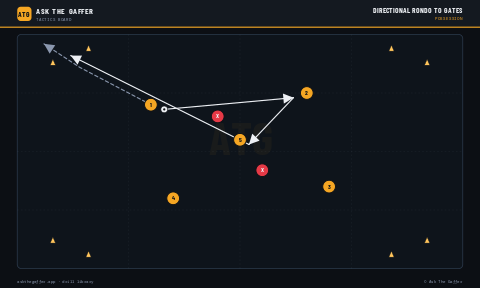
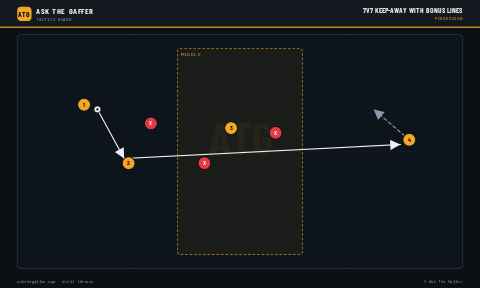
So give it stakes. Count consecutive passes. Make the defender who wins it swap with whoever lost it. Add bonus lines. The drills here that do this are the ones worth your Tuesday: bounce pass escape, keep-away bonus lines, the directional gates version where possession has to go somewhere rather than just continue.
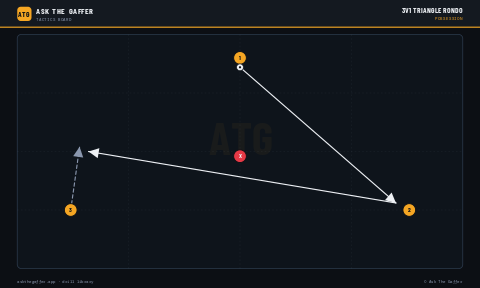
Progress it by direction and by numbers. Start with the 3v1 triangle for the young ones, where a triangle is genuinely all the shape they can hold. Move to 4v2 and 5v2, where support angles start to matter. Then into the position games — 6v4 plus a keeper, three-zone, the 9v9 line-entry game — where possession finally has a direction and a purpose and starts to look like a match.
One warning. Teams that get good at rondos sometimes get worse at scoring, because they learn that keeping it is safe. Finish possession sessions with something that punishes sideways. Overload to isolate does this well.
18 drills
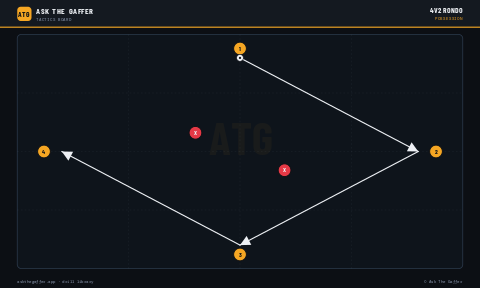 Possession
4v2 Rondo
The classic keep-ball square — sharp passing under pressure, with two defenders hunting the ball.
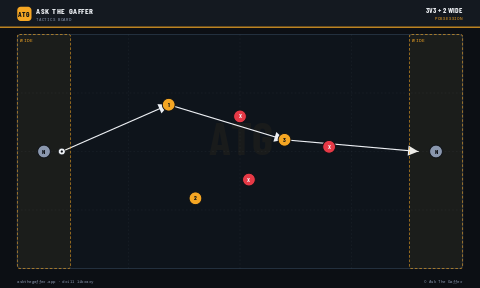 Possession
3v3 + 2 Wide
Two neutral wide players give the team in possession the overload — find the free man and use the width.
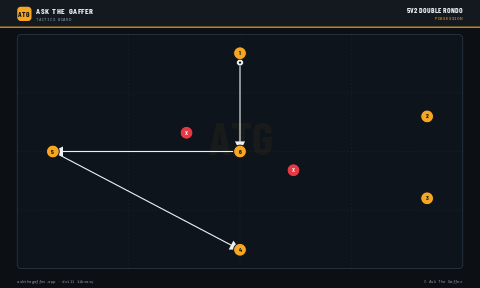 Possession
5v2 Double Rondo
A bigger rondo with a centre line — keep it, but score by splitting the two defenders with a pass.
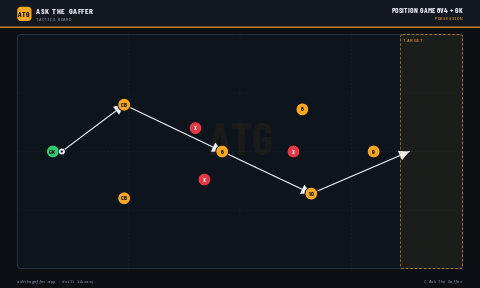 Possession
Position Game 6v4 + GK
Play out from the keeper through a 6v4 overload into a target zone — possession with purpose and direction.
 Possession
3v1 Triangle Rondo
The first rondo — three keep it from one, learning support angles without the chaos of bigger numbers.
 Possession
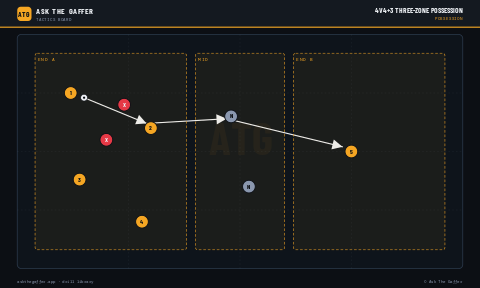
4v4+3 Three-Zone Possession
Play through the middle zone or around it — a positional possession game that mirrors building through midfield.
 Possession
Directional Rondo to Gates
A rondo with a destination — keep the ball, then play through one of the corner gates to score.
 Possession
7v7 Keep-Away with Bonus Lines
Half-pitch keep-away where passes across the bonus lines score — possession that values progression.
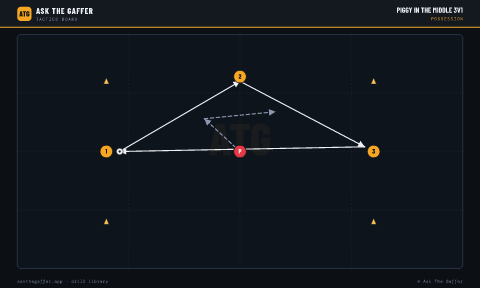 Possession
Piggy in the Middle 3v1
The playground classic turned first rondo — three pass, one chases, and the piggy swaps the moment they win a touch. The gentlest introduction to keep-ball.
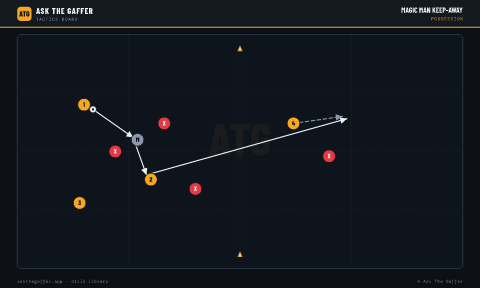 Possession
Magic Man Keep-Away
4v4 plus a neutral 'magic man' who always plays for the ball — string six passes together, then switch sides to score.
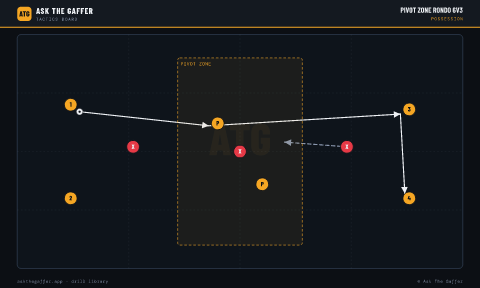 Possession
Pivot Zone Rondo 6v3
A positional rondo in thirds — the ball must travel through the midfield pivot zone, and defenders score by winning it and dribbling out.
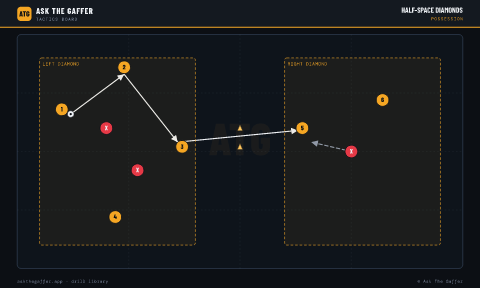 Possession
Half-Space Diamonds
Two 4v2 rondos in the half-spaces linked by a switch pass through a central gate — keep it, then move it when the picture says go.
 Possession
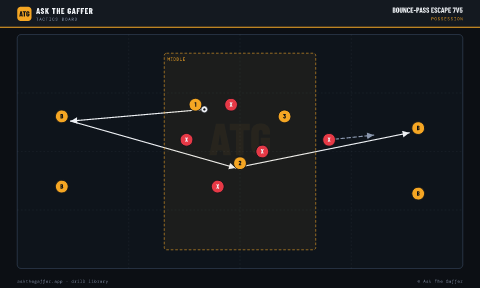
Bounce-Pass Escape 7v5
An outnumbered middle unit survives a 3v4 squeeze by using one-touch bounce players at each end, then escapes the ball into the free third.
 Possession
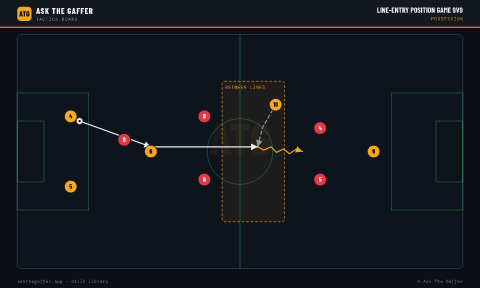
Line-Entry Position Game 9v9
A 9v9 position game where goals are 'line entries' — receive between the opposition's lines and turn to score in the league.
 Possession
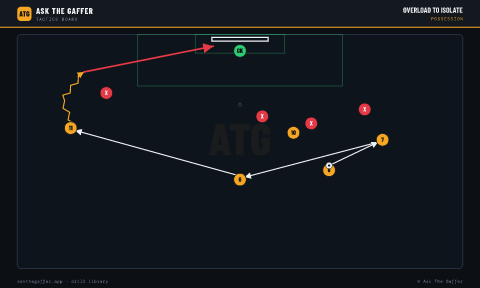
Overload to Isolate
Keep the ball on the crowded side until the far winger is 1v1, then release the switch — goals only count from the isolated side.
 Possession
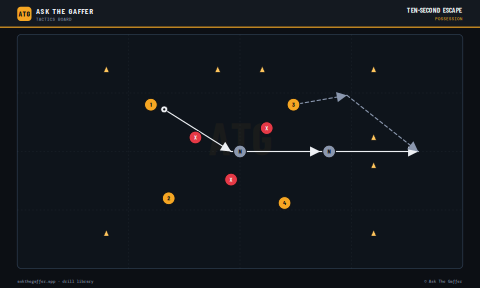
Ten-Second Escape
4v4+2 in a tight box: keep the ball for 10 seconds under pressure, then release it through a gate to score. Possession with a purpose and a clock.
 Possession
Five-Pass Payday
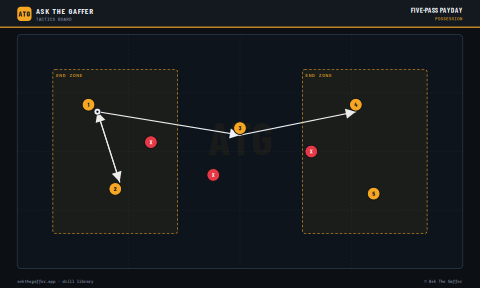
5v5 keep-away where five passes in a row pay out a point and a forward pass through the middle pays double. Young players learn to keep it, then go.
 Possession
Back Line Circulation
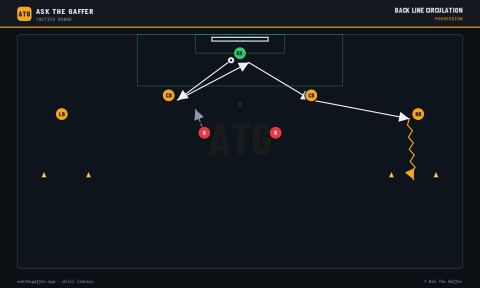
Back four plus keeper circulate the ball against two pressing forwards, moving it side to side until a fullback can drive forward free. Patient build-up made repeatable.