Set Piece Drills
Set pieces are the free goals lazy coaches ignore. A quarter to a third of goals at youth and high school level come from a dead ball, and the average team spends about four minutes a season on them, usually in the week of a cup game, usually badly.
Ten minutes a week. That's the whole ask. Ten minutes, every week, and by October you have two corner routines everyone knows and a defensive setup that doesn't collapse when a tall lad walks up.
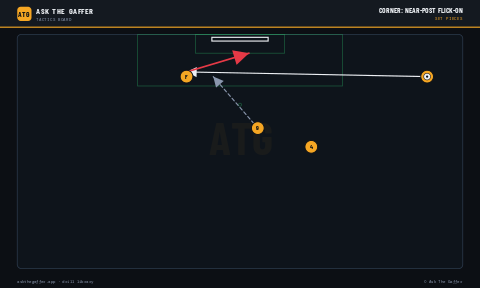
Attacking first. You need one near-post routine and one far-post routine, and that's genuinely enough. Near post flick-on is the highest-percentage corner in the game because it only asks one player to win one header in a crowd. Far post is where your unmarked player is, always, because everyone follows the ball. Add short corner combinations for the games where they put a man on your taker.
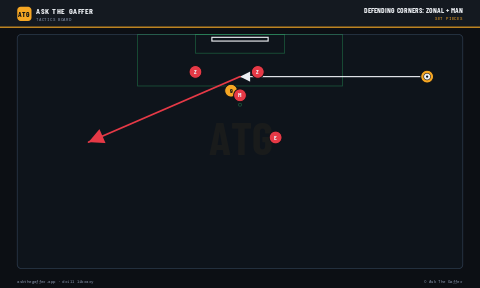
Defending is mostly organisation, and the argument about zonal versus man-marking is less important than everyone deciding which one you're doing. Defending corners zonal man exists to settle it in one session. Get the wall right too — defensive wall organisation is fifteen minutes that will save you a goal a season, minimum.
Two underused ones. The long throw, if you have someone who can genuinely reach the six-yard box, is a corner you get several times a game. And penalties. Penalty pressure ladder is on here because penalty practice with nothing at stake teaches nothing, and the ladder puts something at stake.
Rehearse them until they're boring. Boring is the point.
16 drills
 Set Pieces
Corner: Near-Post Flick-On
An attacking corner routine: whip it to the near post for a flick-on and runners attacking the back post.
 Set Pieces
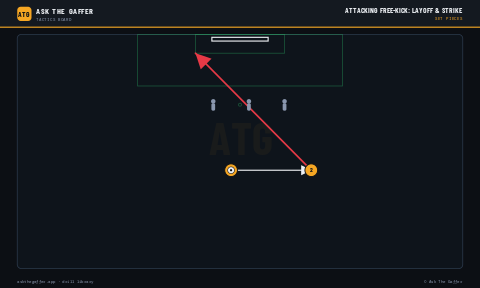
Attacking Free-Kick: Layoff & Strike
A worked free-kick on the edge of the box: a square roll to a runner who strikes first time across the wall.
 Set Pieces
Defending Corners: Zonal + Man
A hybrid corner defence — zonal players protect the key areas while markers track the dangerous runners.
 Set Pieces
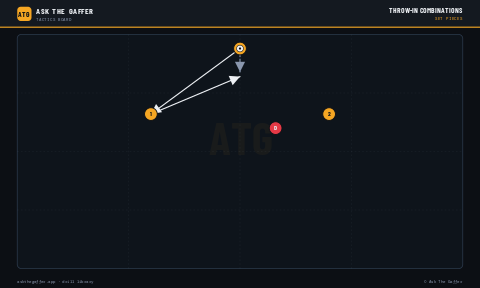
Throw-In Combinations
Stop wasting throw-ins — simple, rehearsed movements to keep the ball and even create an attack.
 Set Pieces
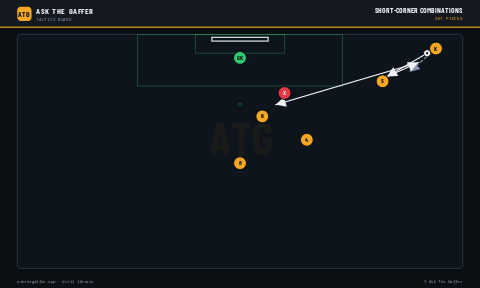
Short-Corner Combinations
Three rehearsed short-corner routines — pull defenders out, create the 2v1, deliver from a better angle.
 Set Pieces
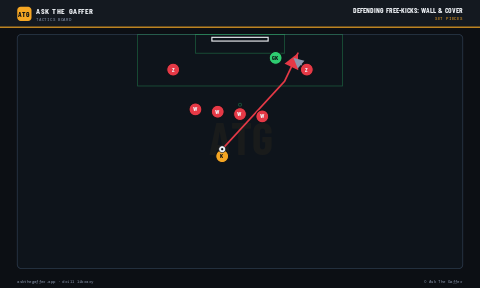
Defending Free-Kicks: Wall & Cover
Build the wall, set the keeper, organise the space — defending direct free-kicks as a rehearsed system.
 Set Pieces
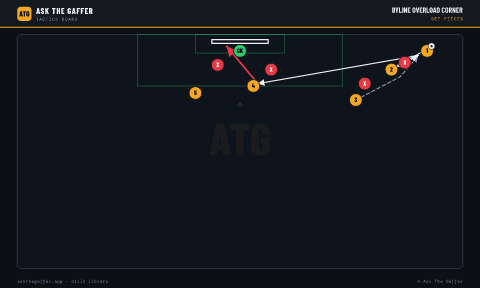
Byline Overload Corner
A rehearsed three-player short corner that manufactures a 3v2 on the byline and ends with a cutback to the edge of the box.
 Set Pieces
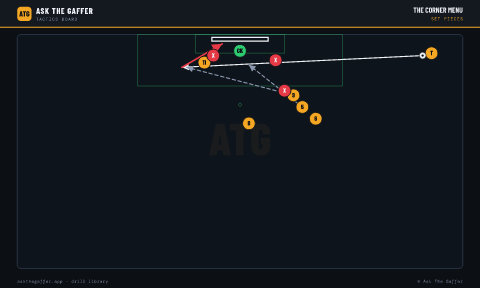
The Corner Menu
Three rehearsed corner routines — front-zone screen, far-post stack, edge recycle — drilled in blocks, then tested against a live defence.
 Set Pieces
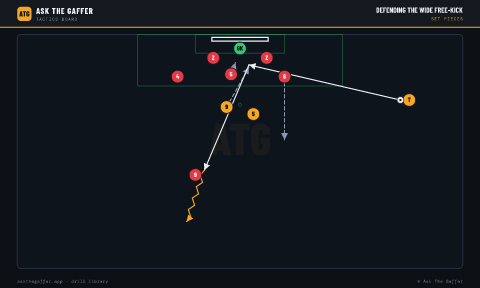
Defending the Wide Free-Kick
Line height, zonal seeds in the six-yard box, tracking the stack and a rehearsed counter outlet — the full defensive package for wide free-kicks.
 Set Pieces
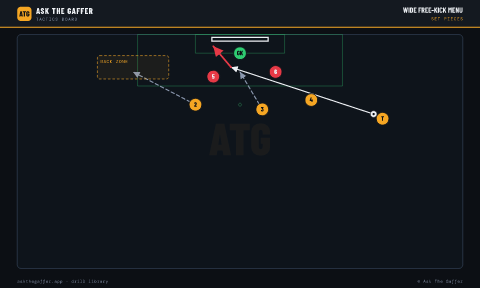
Wide Free-Kick Menu
Build a three-option menu from wide free-kicks — inswinger to the spot, outswinger to the back zone, disguised short — with runners triggered by the taker's cues.
 Set Pieces
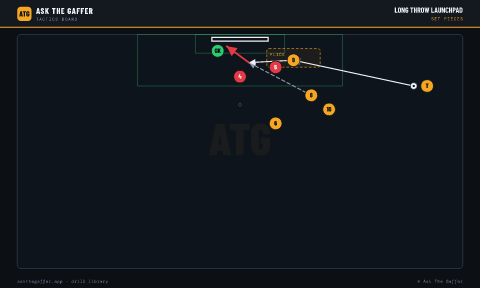
Long Throw Launchpad
A rehearsed long throw-in routine: near-post flick zone, stacked runners attacking the second contact, edge recycler — then flip it and defend the same weapon.
 Set Pieces
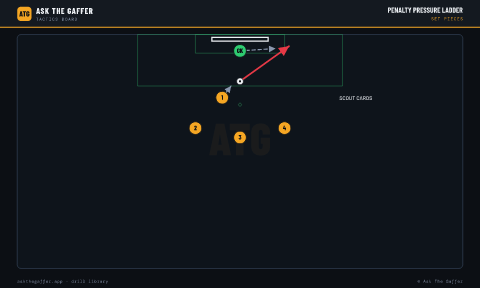
Penalty Pressure Ladder
Penalty practice that actually transfers: every taker builds a fixed routine, climbs consequence rounds, and keepers work from simple scouting cards.
 Set Pieces
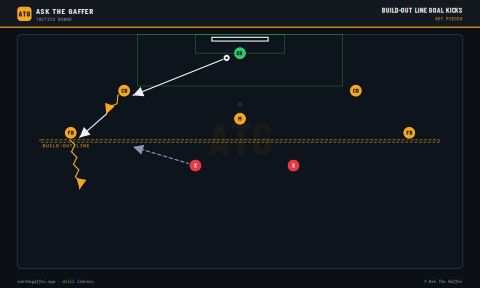
Build-Out Line Goal Kicks
Three rehearsed goal-kick patterns for 7v7 and 9v9 teams playing with the US build-out line. Turn a restart into your first attack.
 Set Pieces
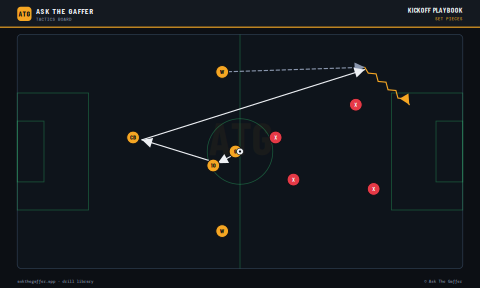
Kickoff Playbook
Three scripted kickoffs your team can run on command: the long diagonal, the back-and-switch, and the direct press bait. Free possession twice a game.
 Set Pieces
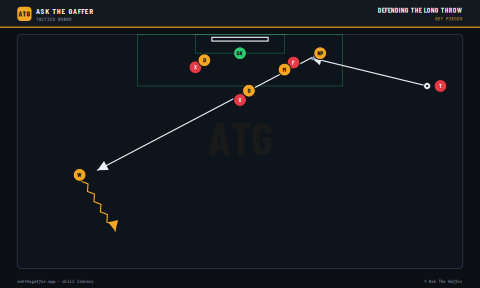
Defending the Long Throw
Organize the box against a long throw: who marks the flick, who guards the near post, who wins the second ball. Then attack the space it leaves.
 Set Pieces
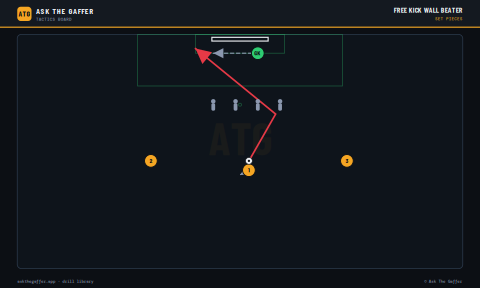
Free Kick Wall Beater
Direct free kicks from 20 to 25 yards against a mannequin wall. Over it, around it, or under it; every shooter finds the one that works for them.