Fitness and Conditioning Drills
Laps without a ball are punishment, not training. Players know the difference, and so does their fitness — running steady laps prepares a team for a sport nobody plays. Soccer is a repeated-sprint game with unpredictable recovery, and if your conditioning doesn't look like that, it isn't conditioning, it's tradition.
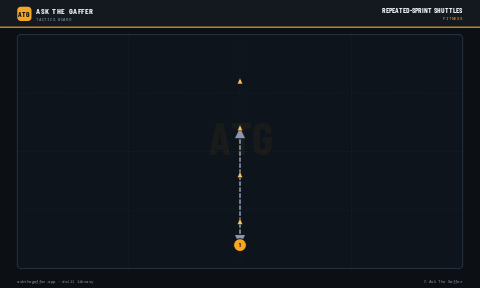
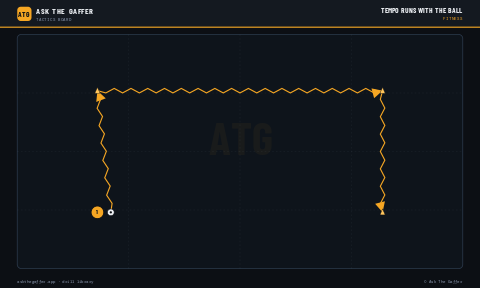
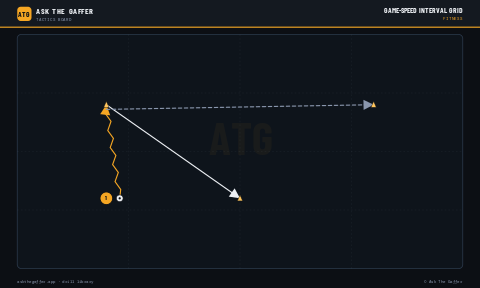
Every drill on this page has a ball in it or a change of direction, and most have both. Repeated sprint shuttles and the game speed interval grid are the closest thing to what the sport actually demands: hard, short, repeated, with incomplete rest. Tempo runs with the ball and the fartlek passing loop build the aerobic base without anybody losing the will to live.
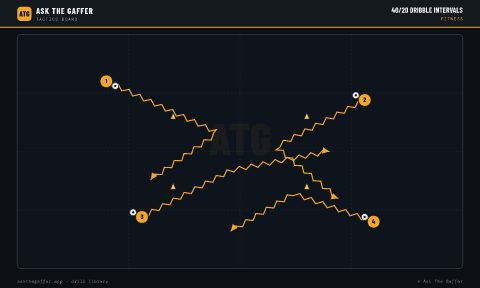
The 40-20 dribble intervals do double duty, which is the point. If a player is going to be tired, she may as well be tired while making decisions, because that's when her decisions go wrong on a Saturday.
Duel day strength circuit is here because being knocked off the ball is a strength problem, not a technique problem, and every coach pretends otherwise. Older groups only.
For the young ones, animal olympics relay. That's it. That's the entire conditioning programme for under-10s, and if that sounds like not enough, watch how much they run in a small-sided game and then tell me they need shuttles.
Two honest warnings. First, don't add conditioning to a week that already has two games — you'll get injuries, not fitness. Second, preseason is when this page matters and the season is when it mostly doesn't. In season, the games are the load. Look at the preseason practice plan for how to phase it.
15 drills
 Fitness
Repeated-Sprint Shuttles
Short, maximal shuttles with timed recovery — builds the repeat-sprint ability the modern game demands.
 Fitness
Tempo Runs with the Ball
Sustained, controlled running with the ball — builds the aerobic base while keeping a footballing touch.
 Fitness
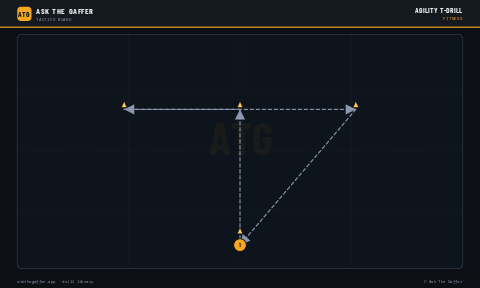
Agility T-Drill
A classic T-shaped agility course — sprint, shuffle and backpedal to sharpen change-of-direction speed.
 Fitness
Game-Speed Interval Grid
Work-and-rest intervals with the ball — match-like bursts that build conditioning you can actually use.
 Fitness
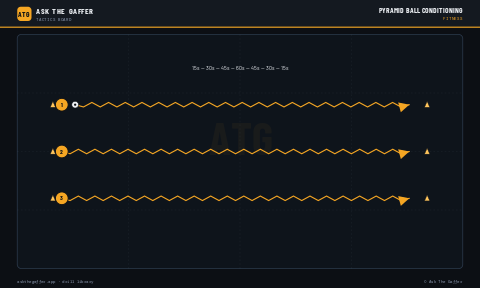
Pyramid Ball Conditioning
A rising-falling pyramid of ball-carrying intervals — conditioning that never leaves the ball behind.
 Fitness
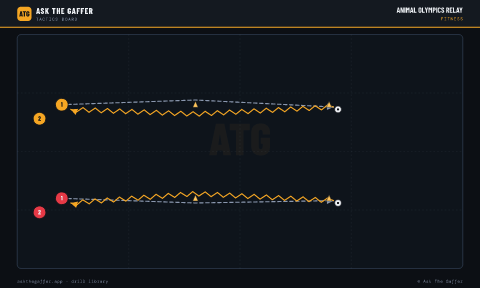
Animal Olympics Relay
Bear crawls, frog jumps and crab shuffles out — dribble home. Whole-body conditioning hidden inside a roaring relay race.
 Fitness
40/20 Dribble Intervals
40 seconds on, 20 seconds off — dribbling intervals with a new skill task every round, so the conditioning hides inside the football.
 Fitness
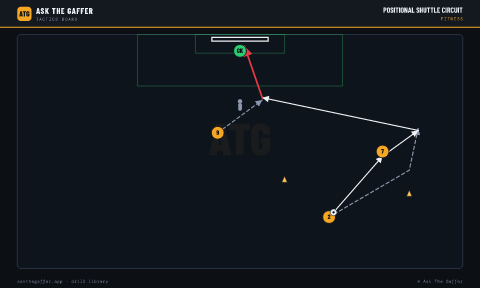
Positional Shuttle Circuit
Repeated high-intensity efforts that mirror each position's match demands — fullback overlap-and-recover, striker press-and-spin — with a ball in every rep.
 Fitness
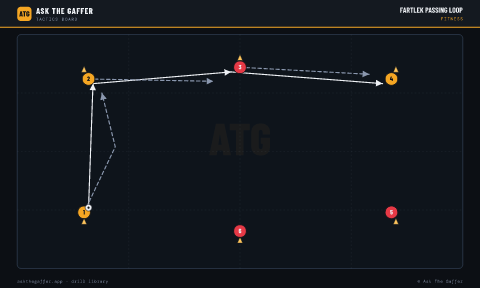
Fartlek Passing Loop
A continuous 12-minute team passing pattern around a big loop, with paced surges on colour calls — fartlek running with the ball always rolling.
 Fitness
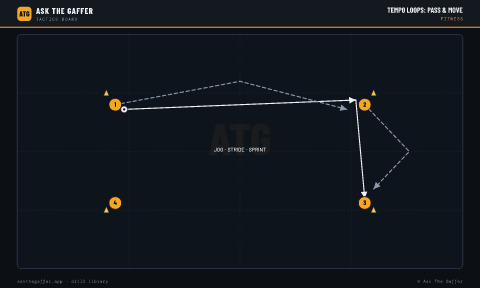
Tempo Loops: Pass & Move
Four-player pass-and-move loops where the legs alternate jog, stride and sprint — and the ball must travel faster every set. Conditioning that still looks like football.
 Fitness
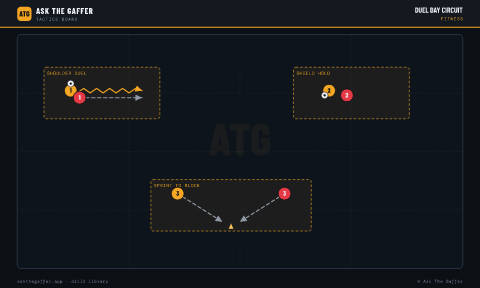
Duel Day Circuit
A three-station battle circuit — shoulder-to-shoulder channel duels, shielding holds, sprint-to-block races. Football strength trained as competition, not gym work.
 Fitness
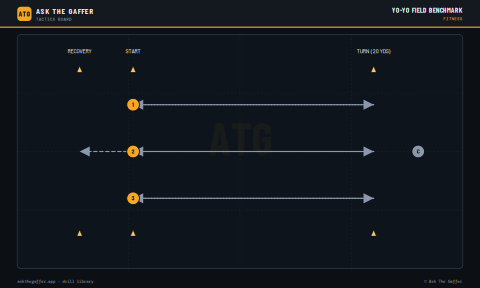
Yo-Yo Field Benchmark
A 20-yard intermittent shuttle test that gives you a hard number on every player's fitness in 15 minutes. Run it week one and again in October.
 Fitness
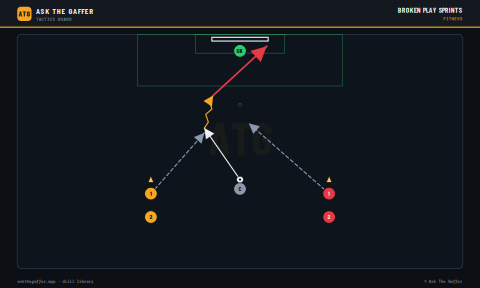
Broken Play Sprints
Repeated 25-yard sprints, but every one chases a real loose ball and ends with a shot. Conditioning that looks like the game.
 Fitness
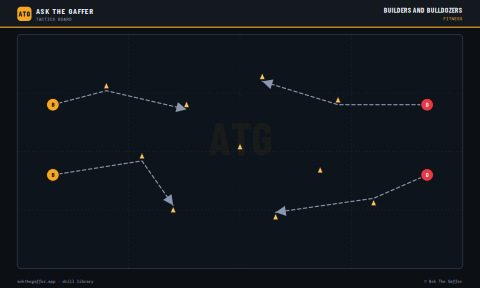
Builders and Bulldozers
Half the kids knock cones over, half stand them back up. Sixty seconds of chaos, nobody notices they are doing fitness.
 Fitness
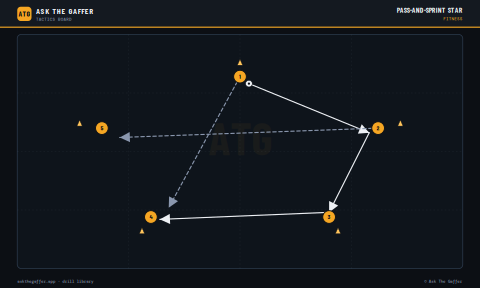
Pass-and-Sprint Star
Five-point star: pass to the next point, sprint to the far one. Passing quality is scored, so the conditioning never turns sloppy.